phdream The House Edge Explained
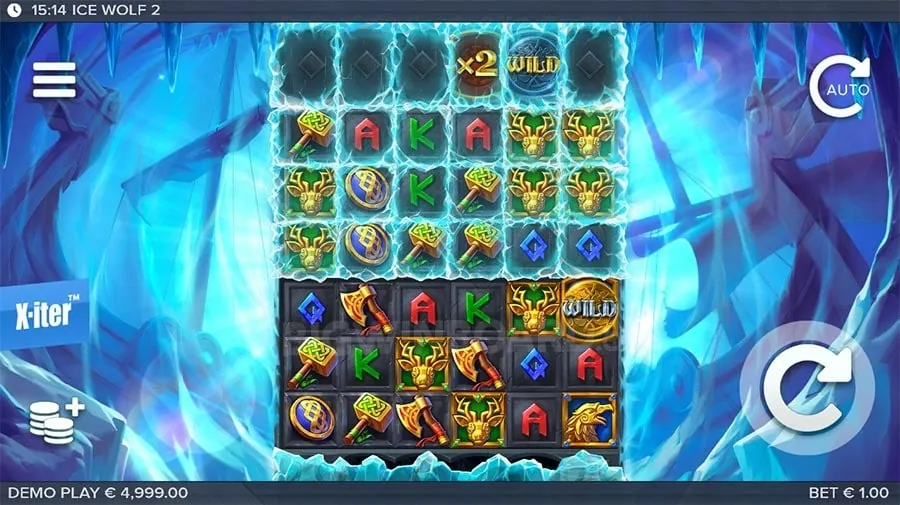
phdream: Understanding The House Edge Explained
Welcome to phdream, your premier online casino destination in the Philippines! If you're new to the world of online gaming or a seasoned player looking to deepen your understanding, one crucial concept you need to grasp is the 'house edge'. This term is fundamental to how casinos, both brick-and-mortar and online like phdream, operate and maintain profitability. The house edge represents the mathematical advantage that the casino has over the player in any given game. It's not about cheating or unfairness; rather, it's a built-in statistical probability that ensures, over the long run, the casino will always come out ahead. Understanding the house edge empowers you to make more informed decisions about which games to play, how to manage your bankroll, and ultimately, how to maximize your enjoyment and potential returns. This article will delve deep into what the house edge is, how it's calculated, and its implications for your gaming experience at phdream and beyond. Whether you're playing on our website or through our convenient mobile casino app, knowing about the house edge is key to smart play.
Looking for an exciting gaming experience? Join phdream today and discover a world of thrilling casino games!
Table of Contents
- What Exactly is the House Edge?
- How Does the House Edge Work?
- Calculating the House Edge: A Closer Look
- House Edge in Common Casino Games at phdream
- Strategies for Minimizing the House Edge
- House Edge vs. RTP: What's the Difference?
- Frequently Asked Questions
What Exactly is the House Edge?
The house edge is a fundamental concept in gambling, representing the casino's built-in advantage over players. Expressed as a percentage, it indicates the average profit the casino expects to make from each bet placed over the long term. For example, if a game has a 2% house edge, it means that for every ₱100 wagered, the casino expects to keep ₱2 as profit, while ₱98 is returned to players in winnings. It's crucial to understand that this is an average over millions of bets, not a guarantee for any single session. In the short term, anything can happen – players can win big, or lose everything. However, as the number of games played increases, the actual results tend to converge with the theoretical house edge. This mathematical certainty is what allows casinos like phdream to operate profitably and offer a wide range of exciting games to players in the Philippines. It's not about manipulating outcomes; rather, it's about the inherent statistical probabilities embedded in the rules of each game.
Understanding the house edge is the first step towards becoming a smarter player. It helps you recognize that while winning is possible and exhilarating, the casino always holds a slight mathematical advantage. This knowledge should guide your bankroll management and game selection, encouraging responsible gaming habits.
How Does the House Edge Work?
The house edge is seamlessly integrated into the rules and payouts of every casino game. It's not a hidden fee but an intrinsic part of the game's design. Let's consider a simple example: a coin flip where you bet on heads or tails. If the payout for a correct guess was 1:1 (meaning you win back your bet plus your bet amount), and the coin was perfectly balanced, there would be no house edge. However, in a casino setting, the payout for such a game might be slightly less than true odds, or there might be an additional outcome that favors the house (like a 'zero' in roulette). This small discrepancy in payouts relative to the true probabilities of winning is what creates the house edge.
For instance, in European Roulette, there are 37 pockets (1-36 and a single 0). If you bet on a single number, the true odds of winning are 1 in 37. However, the payout for a single number bet is typically 35:1. This difference (37 vs. 36 effectively paid) is where the house edge comes from. The casino pays out as if there were 36 numbers, but there are actually 37 possible outcomes, giving the house its advantage.
At phdream online casino, all our games, from slots to live dealer experiences, are designed with a transparent house edge. This ensures fair play while sustaining the platform's operations. Our commitment to transparency means you can trust the integrity of our games. Explore our wide selection of games and see for yourself!
Calculating the House Edge: A Closer Look
While players don't typically need to calculate the house edge themselves (it's usually published or easily found), understanding its calculation can demystify the concept. The house edge is essentially the difference between the true odds of winning and the odds the casino pays out, expressed as a percentage of the initial bet. The formula can be simplified as:
House Edge = (Expected Loss / Initial Bet) * 100%
Alternatively, it can be derived from the probability of winning and losing, and the respective payouts:
House Edge = (P(Loss) * Amount Lost) - (P(Win) * Amount Won) / Initial Bet
Let's revisit the European Roulette example: A single number bet has a 1/37 chance of winning and a 36/37 chance of losing. If you bet ₱1:
- If you win, you get ₱35 + your ₱1 bet back = ₱36 total. Your profit is ₱35.
- If you lose, you lose your ₱1 bet.
Expected outcome per ₱1 bet:
- (1/37) * ₱35 (win) = ₱0.9459
- (36/37) * -₱1 (loss) = -₱0.9729
Expected value = ₱0.9459 - ₱0.9729 = -₱0.027. This means, on average, for every ₱1 bet, you expect to lose ₱0.027. The house edge is therefore 2.7%.
This calculation highlights that every game at phdream, whether it's a slot machine or a card game, has its own unique house edge. This edge is meticulously designed to ensure long-term profitability for the casino while still offering players the chance for significant wins. Understanding these numbers can help you choose games that align with your risk tolerance and playing style. For more details on game rules and odds, visit our phdream website.
House Edge in Common Casino Games at phdream
The house edge varies significantly across different casino games. Knowing these percentages can help you select games that offer better odds, though it's important to remember that lower house edge doesn't guarantee a win, just a statistically better chance over time. Here's a look at the typical house edge for some popular games you'll find at phdream:
- Blackjack: Often considered one of the best games for players, the house edge in Blackjack can be as low as 0.5% to 1% with optimal strategy. However, this varies based on specific rules (e.g., number of decks, dealer hits or stands on soft 17) and whether the player uses basic strategy. Without basic strategy, the edge can rise significantly.
- European Roulette: As discussed, European Roulette (with a single zero) has a house edge of approximately 2.7%.
- American Roulette: This version includes both a single zero (0) and a double zero (00), increasing the house edge to around 5.26%. Players in the Philippines playing at phdream often prefer European Roulette due to its lower edge.
- Baccarat: Baccarat offers some of the lowest house edges, especially on the Banker bet (around 1.06%) and Player bet (around 1.24%). The Tie bet has a much higher house edge (often over 14%), making it generally unfavorable.
- Slots: The house edge for slot machines varies widely, often ranging from 2% to 15% or even higher. This is typically expressed as Return to Player (RTP), where an RTP of 95% means a house edge of 5%. At phdream, we offer a diverse range of slots with varying RTPs, clearly indicated for player information.
- Video Poker: Similar to Blackjack, Video Poker can offer very low house edges (sometimes less than 0.5%) if played with optimal strategy and on specific pay tables.
Choosing games with a lower house edge, combined with strategic play where applicable, can extend your playing time and potentially improve your chances of winning. Check out our game library at phdream to find games that suit your preference and strategy!
Strategies for Minimizing the House Edge
While you can't eliminate the house edge, there are several strategies you can employ to minimize its impact and improve your overall gaming experience at phdream:
- Choose Games with Lower House Edge: As detailed above, some games inherently offer better odds than others. Prioritize games like Blackjack (with basic strategy), Baccarat (Banker bet), and certain Video Poker variations.
- Learn Optimal Strategy: For skill-based games like Blackjack and Video Poker, learning and consistently applying optimal strategy can significantly reduce the house edge. This involves knowing the best move for every possible hand. There are countless resources online and strategy charts available to help you master these techniques.
- Manage Your Bankroll: Set a budget for your gaming sessions and stick to it. Never chase losses. Responsible bankroll management ensures you play within your means and can walk away when your budget is exhausted, regardless of outcomes.
- Take Advantage of Bonuses and Promotions: phdream offers various promotions and bonuses that can give you extra playing funds or free spins. While these often come with wagering requirements, they can effectively reduce the cost of play and give you more chances to win without risking your own capital.
- Understand Game Rules and Payouts: Before playing any game, especially slots, make sure you understand its rules, payout structure, and any special features. For slots, check the Return to Player (RTP) percentage. A higher RTP means a lower house edge.
- Play European Roulette Over American Roulette: If you enjoy roulette, always opt for European Roulette (single zero) over American Roulette (double zero) to benefit from the lower house edge.
By implementing these strategies, you can make smarter choices and enhance your gaming sessions at phdream. Remember, gambling should always be seen as entertainment, and playing responsibly is key. Sign up for phdream today and put your strategies to the test!
House Edge vs. RTP: What's the Difference?
While closely related, the house edge and Return to Player (RTP) are two sides of the same coin, often used interchangeably but with slightly different perspectives:
- House Edge: As we've extensively discussed, the house edge is the casino's mathematical advantage, expressed as the percentage of each bet the casino expects to keep over the long run. For example, a 5% house edge means the casino expects to profit ₱5 for every ₱100 wagered.
- Return to Player (RTP): RTP is the inverse of the house edge. It represents the percentage of all wagered money that a game is expected to pay back to players over time. For example, a slot machine with a 95% RTP means that for every ₱100 wagered, the game is expected to return ₱95 to players in winnings.
The relationship is simple: House Edge = 100% - RTP and RTP = 100% - House Edge. So, a game with a 5% house edge will have a 95% RTP, and vice-versa.
RTP is most commonly used in relation to slot machines and other fixed-odds games, as it gives players a clear indication of how much they can expect to get back over the long term. At phdream, we are committed to transparency, and you'll find RTP information readily available for many of our games, especially our vast selection of slots. Understanding both terms allows you to make informed decisions and choose games that align with your desired payout frequency and risk level. Whether you prefer high RTP slots or strategic table games, phdream has something for everyone. Download our mobile app for gaming on the go!
Understanding the house edge is paramount for any serious casino player. It demystifies the mechanics of casino profitability and empowers you to make more strategic choices. While the house always has an advantage, smart game selection, strategic play, and responsible bankroll management can significantly enhance your gaming experience and potential for success. At phdream, we are dedicated to providing a fair, transparent, and exciting gaming environment for all our players in the Philippines. We encourage you to use the knowledge gained from this article to play smarter and enjoy our wide array of casino games responsibly. Ready to put your understanding into practice? Register now and start your phdream adventure!
Frequently Asked Questions
问题1:Can I beat the house edge?
回答内容:While you cannot eliminate the mathematical house edge over the long term, you can certainly win in the short term. Strategies like basic strategy in Blackjack or choosing games with a lower house edge can improve your odds. However, the casino's advantage ensures that over millions of bets, the house will always profit. Responsible gaming and understanding the odds are key to enjoying your experience at phdream.
问题2:Does the house edge apply to all casino games?
回答内容:Yes, every casino game, whether it's slots, table games, or live casino options at phdream, has a built-in house edge. This edge varies significantly from game to game and even between different variations of the same game. It's the mechanism by which casinos ensure their long-term profitability.
问题3:How does phdream ensure fair play with the house edge?
回答内容:At phdream, fairness and transparency are paramount. The house edge is a statistical probability, not a manipulation of outcomes. Our games use certified Random Number Generators (RNGs) for fairness, and payouts are consistent with published odds. We adhere to strict regulatory standards in the Philippines to ensure a trustworthy gaming environment. You can visit our website for more details on our commitment to fair play.
问题4:Is RTP the same as volatility?
回答内容:No, RTP (Return to Player) and volatility are different concepts. RTP indicates the long-term theoretical payout percentage of a game, reflecting the inverse of the house edge. Volatility (or variance) describes the risk level of a game – how often and how much it pays out. High volatility games pay out less frequently but with larger amounts, while low volatility games pay out more often but with smaller amounts. Both are important factors to consider when choosing games at phdream.